
A rural property looks like a deal until the insurance quote comes back, the assessor pulls the Greenbelt rollback, and the planning department schedules your variance hearing two months out. These three friction surfaces rarely appear in the comp set — and they’re the most common reason rural transactions collapse between contract and close. Understanding them before you go hard puts you in a position to price the friction in, structure around it, or walk away. This is the framework we use before we recommend that a client commit to a rural property.
Insurance Loss-Cost Geography: Why Rural ZIPs Quote Differently
Insurance pricing in rural Utah is not driven by the building. It’s driven by the ZIP code’s loss-cost ratio, the reinsurance market, and the gap between your agent’s estimator and the insurer’s computerized valuation model. These forces routinely produce rural premium quotes two to three times the comparable coverage cost on a structurally similar Wasatch Front building — even when the rural structure carries lower replacement value. The mechanic is straightforward: loss-cost ratios reflect actual claims paid in the territory, and rural counties carry materially higher base rates because wildfire, hail, and wind corridors concentrate loss history in fewer ZIPs. When reinsurers retreat from a corridor, the carriers that remain reprice the remaining policies to cover their share of the now-distributed risk.
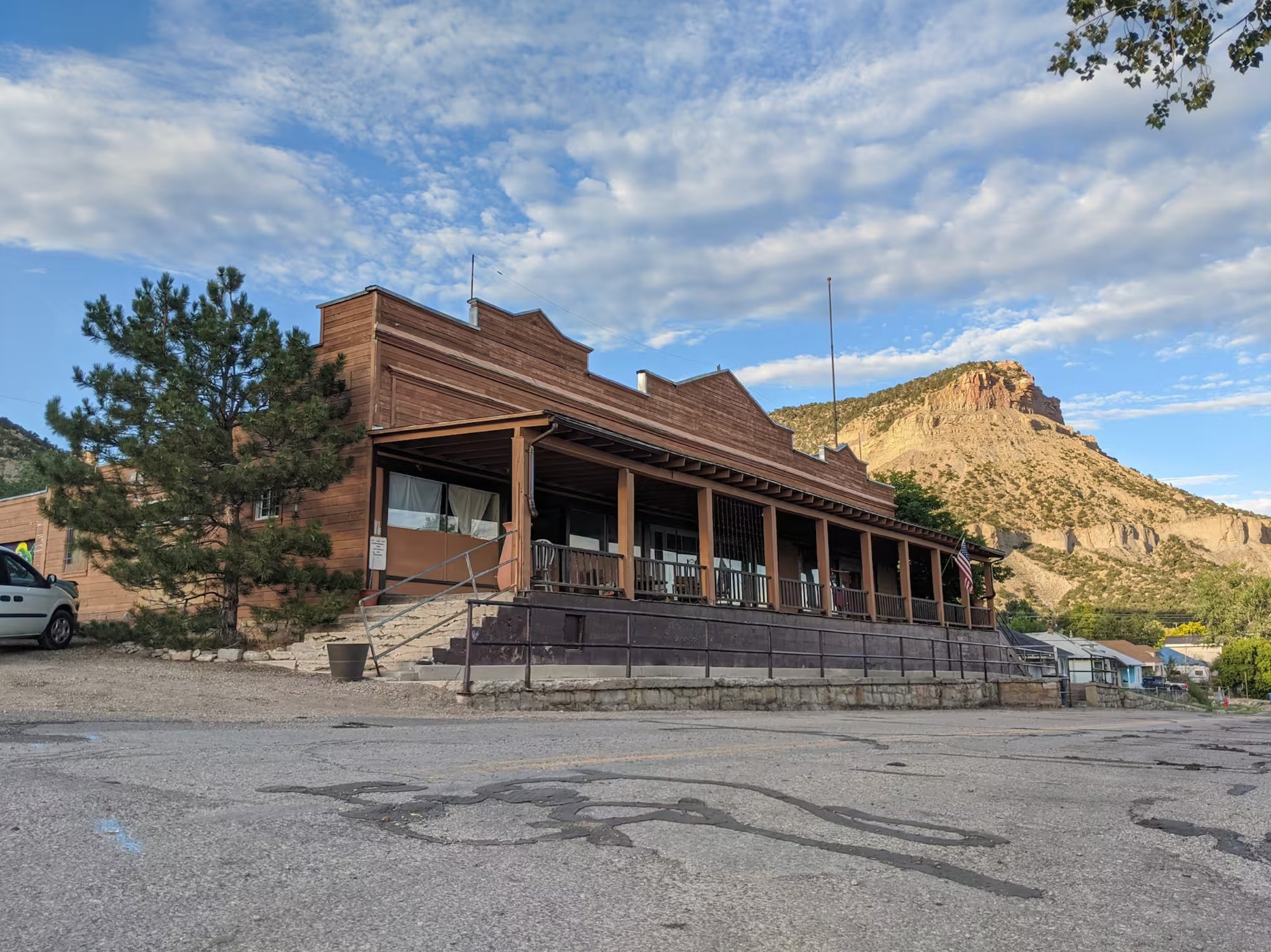
The secondary issue is valuation. An experienced rural agent walks the structure, lists the actual replacement components — masonry, timber framing, period-specific masonry work that cannot be replaced with modern materials — and quotes on real replacement cost. The carrier’s underwriting system applies a regional cost-per-square-foot factor and frequently returns a valuation 30–60% below the agent’s number. The carrier then co-insures to the lower figure, and the owner is left disputing the valuation (slow), accepting partial coverage, or paying for an endorsement to close the gap. On an income-producing rural building, this gap regularly shifts annual premiums by thousands of dollars and compresses project cash flow from day one. Our case study on the Old Company Store in Helper, Utah shows how place-based underwriting reshapes an adaptive reuse deal when these loss-cost factors are mapped in advance.
Property-Tax Friction: Greenbelt (FALA) and the Transfer-Tax Trap
Utah’s Farmland Assessment Act (FALA), enacted under Utah Code §59-2-5, lets qualifying agricultural land stay on a productivity-based assessment rather than market value — a meaningful tax reduction on grazing and crop parcels. The catch is most often encountered at closing: if the property has been enrolled in FALA and the new owner discontinues the agricultural use within three years of the transfer, the county assessor is required to roll back the benefit and assess deferred property tax for the previous three years on the difference between market-rate and greenbelt assessment. The rollback bill arrives separately from the regular tax bill, frequently with no advance disclosure beyond an obscure line on a county assessor form. Buyers who don’t screen for active FALA exposure regularly absorb a five-figure obligation in year two or three of ownership.
The principle is documented in our Duchesne County land investing guide, and the same structure applies in every Utah county using the FALA framework. The other tax-friction surface buyers miss is transfer-tax and recording-fee treatment for ag land — most counties exempt agricultural transfers from portions of the documentary fee structure when qualifying documentation is filed, but exemption eligibility is mechanical and missed filings convert a favorable transfer into a disadvantaged one. Verify both the active FALA status and the exemption-eligibility documentation before contract, not at closing. Water rights complexity compounds the issue; our Utah water rights guide explains why severance and partial-interest transfers carry valuation consequences distinct from surface-only sales.
Permit Friction: Variance and Conditional-Use Timelines in Unincorporated Counties
A building permit on a residential job in a Wasatch Front city is a 30-day turn, often faster. The same project in an unincorporated Carbon, Emery, or Duchesne County — even one that is straightforward under the technical building code — routinely takes 90 to 180 days when a variance or conditional use permit is required. The reason is structural: rural planning departments are staffed for residential-only review of single-family permits, and discretionary land-use approval (variance, conditional use, historic overlay review) is sequenced into a planning commission agenda that meets monthly or bi-monthly. Closing-day income assumptions, which usually assume permitting takes 60 days, are routinely off by a factor of two to three.
For adaptive reuse on historic rural buildings, the picture is more complicated. Utah adopts the International Building Code with state amendments and permits the International Existing Building Code for rehabilitation. The IEBC provides compliance pathways that acknowledge existing building condition rather than requiring new-construction standards, which materially reduces rehabilitation cost on a Certified Historic Structure. But the IEBC pathway still requires SHPO coordination, a Part 1 certification if HTC is in the stack, and variance approval for any use change that doesn’t conform to current zoning. This sequencing is the framework addressed in our adaptive reuse and HTC guides — see converting rural buildings into income-producing assets and the historic tax credits for rural Utah properties guide. The permit timeline is rarely the binding constraint on a well-prepared project, but it is the binding constraint on a project that didn’t plan for it.
The Deadline Mismatch: Why Insurance, Tax, and Permit Dates Don’t Align
A rural transaction closes with three effective dates that don’t synchronize. Insurance binding takes effect at closing or possession date, but the loss-cost quote is valid only for a defined window (often 30 days) — if closing slips, the quote must be re-shopped or re-bound at whatever the new loss-cost environment is, sometimes less favorable. Property tax proration runs on the calendar-year cycle, not the closing date: obligations accrue against the property regardless of who holds title on January 1. Permit sign-offs, where required as a closing condition on an adaptive reuse deal, run on the planning commission calendar and frequently close after the binder has expired and after the prorated tax has been invoiced.
For a rural deal depending on a clean title at closing, an insurance quote at binder, and a permit before construction begins, the mismatch concentrates risk in the closing week. A buyer who planned for one deadline has not planned for all three. The right pre-close friction work aligns the three dates — locks the insurance quote through closing, confirms the tax proration in writing before signing, and pre-files the variance so the permit timeline starts before the deal closes.
A Defensible Pre-Close Friction Audit
Before going hard on a rural property, screen for the three friction surfaces this article maps. The checklist:
- Insurance loss-cost exposure by ZIP. Pull a representative quote from a carrier that actively writes in the property’s county, not from a national aggregator that returns a generic estimate. Confirm whether the carrier’s valuation matches the agent’s estimator or whether an endorsement will be required. Ask specifically whether the ZIP has been re-rated in the last 24 months — that single question surfaces reinsurance retreat in real time.
- FALA / Greenbelt status and rollback exposure. Contact the county assessor directly. Confirm whether the parcel is currently enrolled, when the enrollment was last recertified, and what the three-year look-back period is under the current use. If the answer is yes, model the rollback tax obligation as a component of your acquisition cost — do not treat it as a contingent future liability.
- Variance and conditional use feasibility. For any intended use that differs from current zoning, contact the planning department and ask specifically about variance timeline, required findings, planning commission scheduling, and whether a pre-application meeting is available. Pre-application feedback is free in most counties and routinely halves the variance timeline.
Add two secondary checks: water rights transfer (covered in our USDA loans guide and the 1031 exchange guide) and historical use disclosures if the property is in a use class that might trigger Phase I environmental review. Both can be deferred but should not be omitted.
Why the Friction Is Stable, Not Transient
The objection most often raised when this friction is mapped for a client is that it will improve — that carriers will return to the territory, that counties will staff up their planning departments, that FALA will be reformed. None of these is a near-term prospect. Rural assessment districts remain small and structurally under-resourced; insurance carrier competition outside major population centers is constrained by reinsurance pricing and broker capacity; planning commission agendas run on notice-and-hearing cycles that are calibrated to residential volume, not commercial throughput. The friction is structural, not a quarter-to-quarter phenomenon, and rural buyers who treat it as something to outlast routinely pay for that misread with a closed deal that should have been walked away from or restructured.
Ready to map the friction on a specific rural property before you commit?
Request a Discovery Assessment Pre-close friction audit (insurance, tax, permits). No obligation.